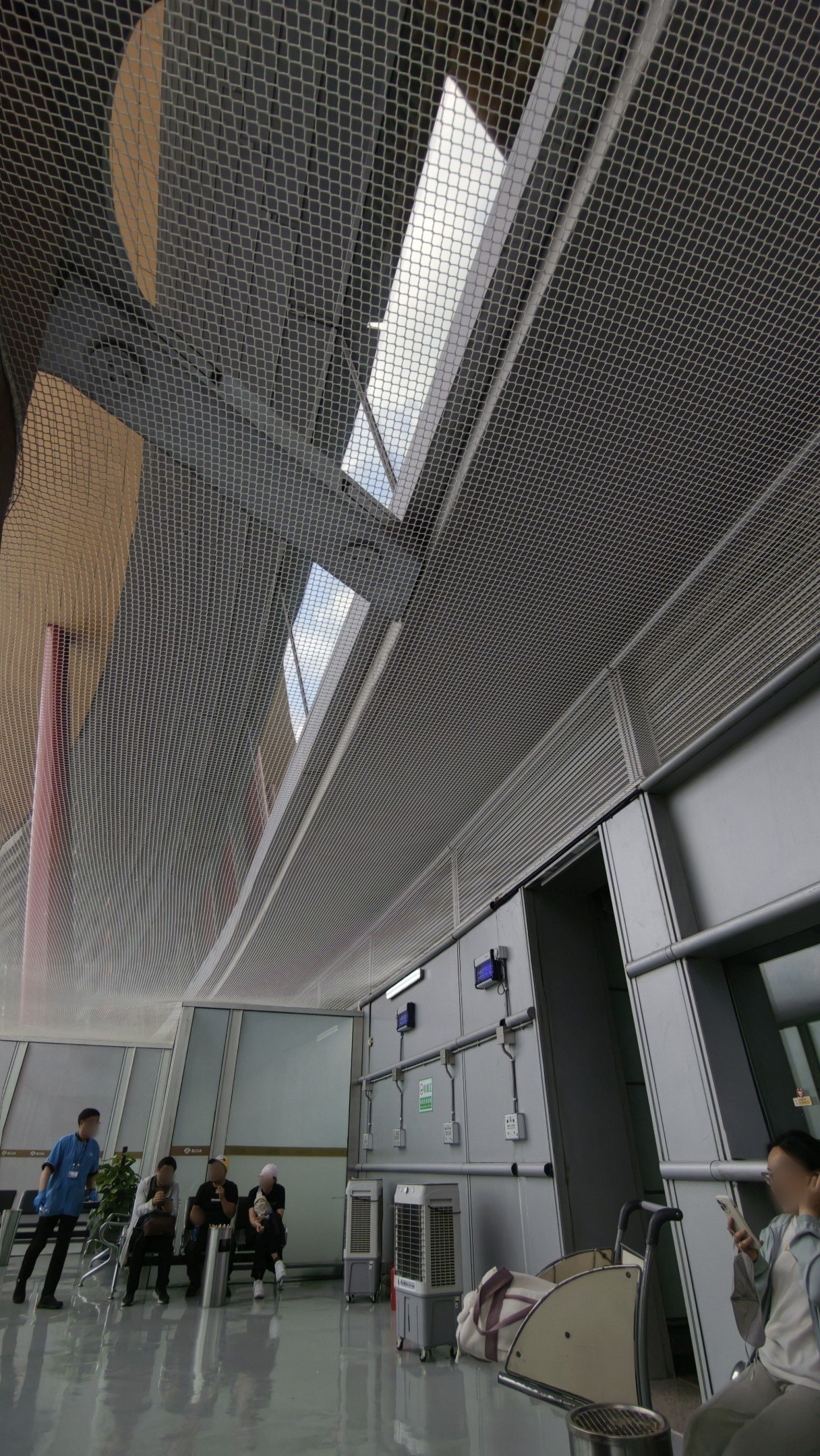
Yes, Beijing Capital Airport (PEK) has designated smoking areas in the marked outdoor areas outside each of the three terminal buildings, near the departure entrances and arrivals exits. The indoor smoking rooms were permanently closed on 1 June 2015, the day Beijing’s citywide smoke-free law took effect, so today these outdoor areas are where you can light up.
是的,北京首都国际机场(PEK)在三座航站楼出发入口和到达出口附近的标识户外区域设有指定吸烟区。室内吸烟室已于2015年6月1日(北京全市禁烟令生效当日)永久关闭,因此这些户外区域就是您可以吸烟的地方。
Terminal 1 Smoking Areas
Terminal 1 is the quiet old-timer. Originally opened in 1958 and renovated multiple times, it now mostly handles Hainan Airlines domestic flights and a handful of regional carriers. Outdoor smoking areas are found near the main entrance on the departures level (look for ashtrays just past the curbside drop-off lane) and outside the arrivals exit on the ground floor, off to the right of the taxi pickup zone. T1 is compact — most gates are within a 5-7 minute walk of the exits, making this the easiest terminal at PEK for a quick smoke break.
1号航站楼吸烟区 — 1号航站楼是首都机场最早投入使用的航站楼(1958年启用),目前主要服务海南航空国内航班及少数支线航空公司。户外吸烟区位于出发层主入口处(过了路边落客区即可看到烟灰缸),以及到达层地面出口外、出租车上客区右侧。T1相对紧凑,大多数登机口距离出口仅需5-7分钟步行,是首都机场最方便快速吸烟的航站楼。
Terminal 2 Smoking Areas
Terminal 2 is the mid-size workhorse, home to China Eastern, China Southern, and a mix of SkyTeam and one-world carriers (excluding Star Alliance, which lives at T3). Designated outdoor smoking spots sit near the curbside drop-off area on the departures floor — marked smoking areas are spaced along the length of the building, each with ashtrays and signage in Chinese (吸烟区) and English. On the arrivals level, walk past the taxi queue and look for the smoking area signage to your right. Walking time from a typical T2 gate to the exit is 10-12 minutes; budget 25-35 minutes round-trip including security re-screening, longer during the 7-9am and 6-8pm peaks.
2号航站楼吸烟区 — 2号航站楼是中型主力航站楼,主要承担中国东方航空、中国南方航空以及天合联盟、寰宇一家成员航空(星空联盟在T3)的航班。指定户外吸烟点位于出发层路边落客区附近,沿建筑物长度设有多处标识清晰的吸烟区,均配有烟灰缸和中英文标识(吸烟区/Smoking Area)。到达层走过出租车排队区后,在右侧可看到吸烟区指示牌。从T2典型登机口到出口约需步行10-12分钟,加上安检复检,往返预计25-35分钟,早7-9点及晚6-8点高峰时段更久。
Terminal 3 Smoking Areas
This is where things get serious. Terminal 3 is Norman Foster’s sweeping dragon-shaped masterpiece, opened for the 2008 Beijing Olympics and once the largest single airport building in the world. It handles Star Alliance carriers, Air China’s hub operations, and most international long-haul traffic. T3 has three sub-buildings: T3-C (the main check-in hall), T3-D (used mostly for charters), and T3-E (the satellite that handles international flights, connected to the main building by an automated people-mover train).
Outdoor smoking areas are located:
- T3-C departures level: Outside Door 5 and Door 7, both with ashtrays and shaded seating. This is the closest option for travelers checking in at the main concourse.
- T3-C arrivals: Ground floor, exit through the public arrivals hall and turn left — the smoking area is along the curb between the bus pickup and the taxi rank.
- T3-E: After the people-mover ride from T3-C, the only smoking option is to clear immigration and exit to the arrivals curbside. This means inbound international passengers can smoke after baggage claim, but departing T3-E passengers cannot smoke after passing security in T3-C.
If you are departing from a T3-E gate, budget at least 25 minutes to ride the people-mover back to T3-C, exit, smoke, and re-enter security — and that is in off-peak conditions. During peak hours it can stretch past 50 minutes. Most experienced smokers passing through PEK time their last cigarette before the T3-C security checkpoint and accept the 8-10 hour gap until landing.
3号航站楼吸烟区 — 3号航站楼是诺曼·福斯特设计的“飞龙”造型杰作,为2008年北京奥运会落成,曾是世界最大的单体航站楼。它服务星空联盟成员航空、中国国际航空枢纽运营,以及大部分国际长途航班。T3分为三个子楼:T3-C(主值机大厅)、T3-D(主要承担包机)、T3-E(国际航班卫星厅,通过自动旅客捷运系统与主楼相连)。
户外吸烟区位置如下:
- T3-C出发层:5号门和7号门外,均设烟灰缸和遮阳座椅,是主航站楼值机旅客最近的选择。
- T3-C到达层:地面层,从公共到达大厅出去后向左转,吸烟区位于巴士上客区与出租车站之间。
- T3-E:乘捷运从T3-C抵达后,唯一吸烟方式是过移民检查后到到达层路边。这意味着入境国际旅客可在取行李后吸烟,但T3-E出发旅客在T3-C过安检后无法再吸烟。
从T3-E登机口出发,需预留至少25分钟用于乘捷运返回T3-C、出关、吸烟、再次过安检——这还是非高峰期。高峰时段往返可能超过50分钟。多数熟悉PEK的吸烟旅客选择在T3-C安检前抽完最后一支烟,然后接受8-10小时的航班“禁烟期”。
Before Security / Landside
The easiest smoke break at PEK is before you enter the terminal. All three terminals have outdoor areas near their main entrances with ashtrays and clear signage. If you are being dropped off, taking the Airport Express subway from Dongzhimen, or arriving by intercity train at the airport’s underground station, take a few minutes outside before heading in. The airport lists fifteen designated outdoor smoking areas across the three terminals in total. Once you clear security, you are locked into the indoor world until you land — and unlike many Asian hubs, PEK has zero airside smoking lounges, period.
安检前 / 公共区 — 在首都机场最方便的吸烟时机是进入航站楼前。三座航站楼主入口附近均设有户外吸烟区,配有烟灰缸和清晰标识。无论您是被送机、乘坐机场快线地铁从东直门到达,还是从机场地下城际铁路站抵达,进入大厅前都可以在外抽支烟。机场在三座航站楼共设有15处指定户外吸烟区。一旦过安检,直到落地您都被锁在禁烟的室内世界——与亚洲许多枢纽不同,PEK完全没有安检后的吸烟室。
Connecting Flights and Leaving the Airport
If you are connecting at PEK, remember that every smoke break means exiting the secure zone and re-clearing security. Passengers on long layovers sometimes leave the airport entirely; China’s transit-visa rules determine whether that is possible for your nationality — the details sit in the China guide linked below.
中转航班与出机场 — 如果您在PEK中转,请记住每次吸烟都意味着离开安检区并重新过安检。长时间中转的旅客有时会选择完全离开机场;中国过境免签规定决定了这是否适用于您的国籍——详情见下方链接的中国指南。
How PEK Compares to Other Chinese Hubs
Travelers connecting from Beijing Capital to Shanghai Pudong (PVG) will actually find PVG easier — Pudong has marked outdoor terraces accessible after security near gates such as 200-203 and 213-216 in T1. If you are heading to Beijing Daxing (PKX) instead, be aware that Daxing’s Zaha Hadid starfish layout creates very long walks to outdoor areas — even longer than T3-E at PEK in some cases. Guangzhou Baiyun (CAN) goes further still, with indoor smoking rooms after security in Terminal 2 near Gates A50 and A63 and along the B pier, plus outdoor areas near the terminal entrances. There is no single nationwide airport-smoking rule in mainland China — policy varies city by city. Beijing’s 2015 smoke-free law is among the strictest, which is why PEK is outdoor-landside only; some other mainland airports keep airside outdoor terraces or rooms. Outside the mainland framework, Hong Kong (HKG) offers open-air airside smoking terraces — its former indoor rooms are closed — and Macau (MFM) still operates indoor airside smoking lounges.
PEK与其他中国枢纽的对比 — 从首都机场中转至上海浦东(PVG)的旅客会发现浦东更轻松——PVG在T1的200-203号和213-216号登机口附近设有安检后可达的标识户外露台。若您前往的是北京大兴(PKX),请注意大兴扎哈·哈迪德的“海星”布局使步行前往户外区域的路程很长——某些情况下甚至超过PEK的T3-E。广州白云(CAN)则更进一步,在2号航站楼A50和A63号登机口附近及B指廊沿线设有安检后室内吸烟室,航站楼入口附近另设户外吸烟区。中国大陆没有全国统一的机场吸烟规定,政策因城市而异。北京2015年的禁烟法规属于最严格之列,因此PEK仅限户外公共区吸烟;其他一些大陆机场仍保留安检后户外露台或吸烟室。在中国大陆体系之外,香港(HKG)提供安检后露天吸烟露台——其原室内吸烟室已关闭——而澳门(MFM)仍运营安检后室内吸烟室。
Summary
| Location | Terminal | Type | Security |
|---|---|---|---|
| Departures-level entrance | T1 | Outdoor | Landside, past the curbside drop-off |
| Arrivals exit | T1 | Outdoor | Landside, right of the taxi pickup |
| Departures curbside | T2 | Outdoor | Landside, marked areas along the building |
| Arrivals level | T2 | Outdoor | Landside, past the taxi queue |
| Doors 5 and 7 | T3-C | Outdoor | Landside, departures level |
| Arrivals curb | T3-C | Outdoor | Landside, ground floor |
| Arrivals curbside | T3-E | Outdoor | Landside, after immigration and exit |
For China airport smoking rules, indoor vs outdoor rules and provincial bans, see our China smoking guide.
如需了解中国机场吸烟规定、室内外吸烟规则和各省执法差异,请参阅中国机场吸烟指南。